
Lightmatch: Bridging the optical gap between mock-up and production in automotive lighting
Reading time: 5 minutes
In automotive lighting development, micro-optical features are increasingly used to enable new design possibilities:
- ultra-thin light guides
- controlled diffusion
- beam shaping
- light curtain effects
- homogeneous illumination without additional components
The hidden discontinuity in the development loop
From concept to SOP, the typical development flow of an optical surface looks like this:- Micro-optical concept design
- Optical simulation
- PMMA mock-up prototype
- Prototype validation
- Production mould manufacturing
- Injection
- Final photometric validation
Why prototype and production don’t correlate
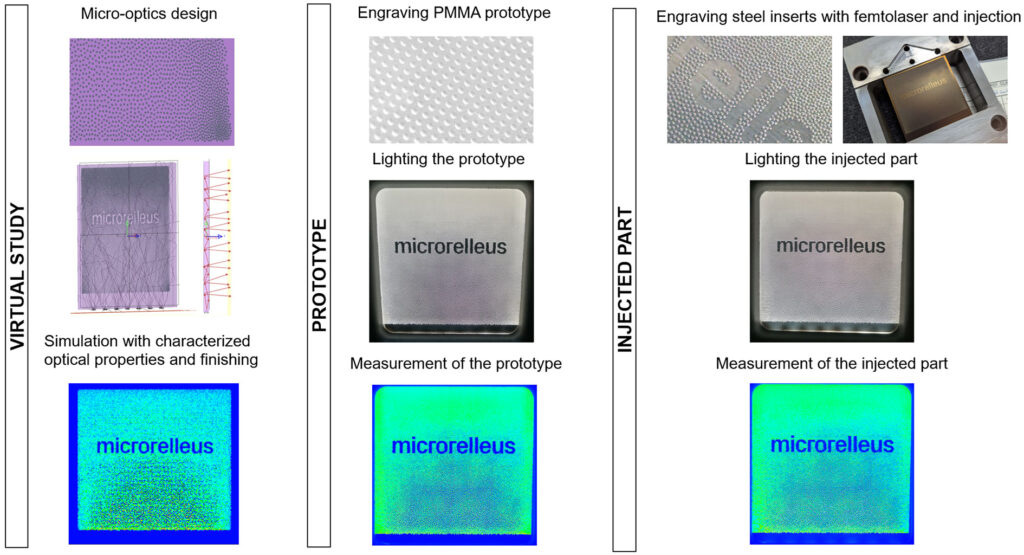
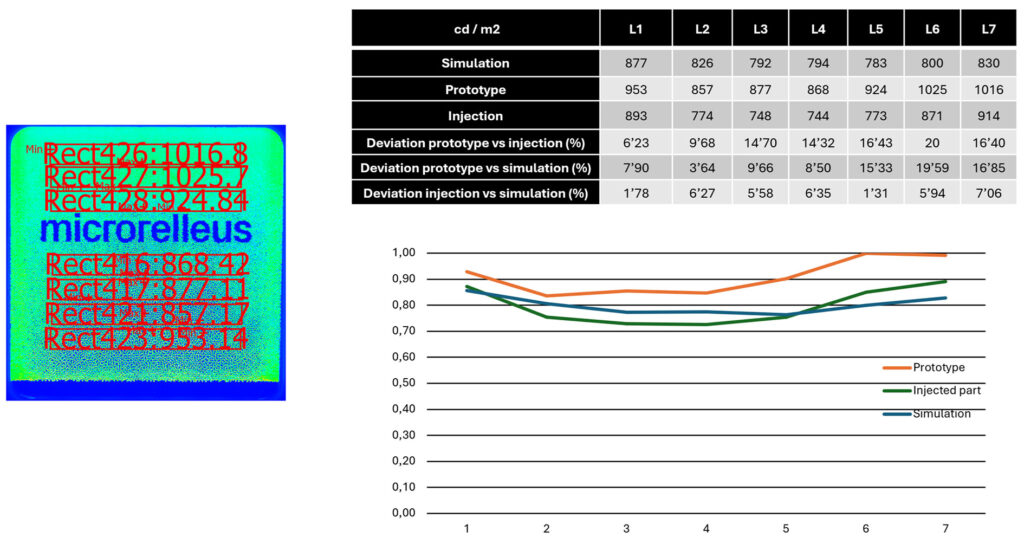
This mismatch is not a design flaw. It is the result of two fundamentally different manufacturing realities: 1. Direct engraving on PMMA prototype The femtosecond laser interacts directly with the PMMA surface, generating a specific micro-geometry and surface finish under highly controlled conditions. This becomes the reference used for early optical validation. 2. Engraving on steel + injection replication In production, the same micro-optical geometry is engraved into hardened steel inserts. From there, the final optical surface is not created by the laser — but by the injection process itself. This introduces:- surface finishing differences
- replication limitations
- material flow behaviour
- process parameter sensitivity
- local shrinkage effects
- micro-structure fidelity loss
The cost of late optical reality
At this stage of the project, the implications are well known to both Tier 1 and OEM engineering teams:- mould modification loops
- optical redesign iterations
- supplier realignment
- tooling rework
- development delays
- SOP pressure escalation
- several thousand euros
- multiple weeks of lead time
- additional coordination across optical, tooling and injection partners
Introducing Lightmatch: correlation months earlier
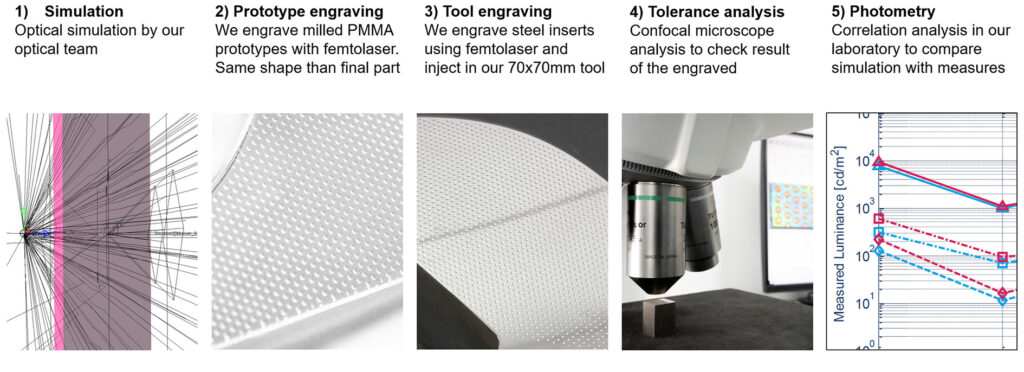
Lightmatch was developed to answer a simple but crucial question much earlier in the project: Will this micro-optical concept behave the same once injected? Instead of validating only a directly engraved prototype, Lightmatch replicates both manufacturing paths in parallel during the early prototype phase.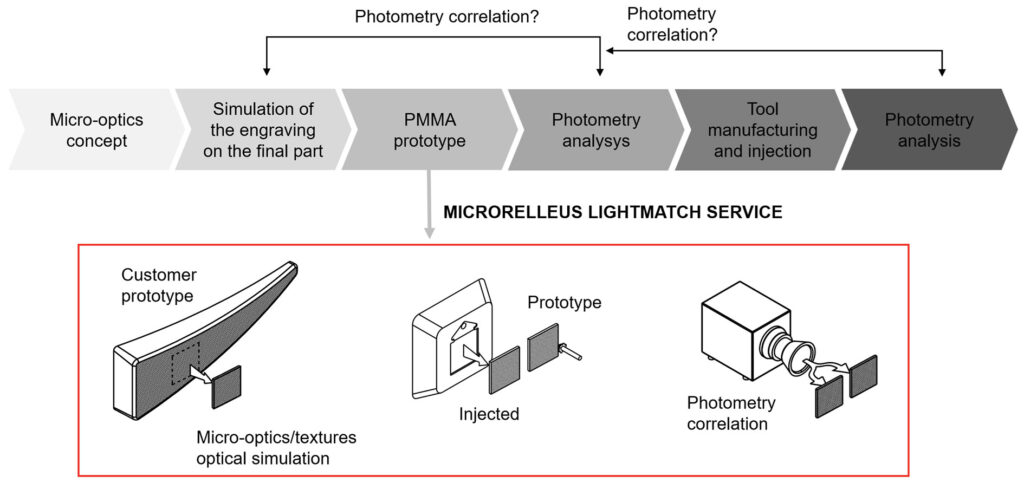
A selected optical area of the part is:
- simulated under its real lighting conditions
- engraved directly on PMMA (prototype path)
- engraved into steel inserts
- injected using a controlled mould
- a mock-up sample identical to today’s prototype validation
- an injected sample manufactured through a production-equivalent process
- confocal microscopy (tolerance and geometry verification)
- photometric testing
- visual appearance assessment
From hope-based validation to predictable production
By introducing injection-representative optical behaviour months before hard tooling decisions are made, Lightmatch enables:- earlier design adjustments
- injection-aware optical validation
- reduced mould modification risk
- compressed development loops
- fewer late-stage surprises


