
Microscatt®: Precision mould texturing for controlled light diffusion
Reading time: 7 minutes
The impact of the led
The introduction of LED technology in automotive lighting enabled sleeker designs, improved energy efficiency, and smarter functionalities. However, it also introduced new optical challenges — most notably, the issue of visible hot spots. Initially, some brands embraced these hot spots as part of their design language.
Over time, however, there was a clear shift toward achieving uniform, homogeneous light surfaces. This transition raised new constraints, requiring careful balance between aesthetic goals and optical performance.
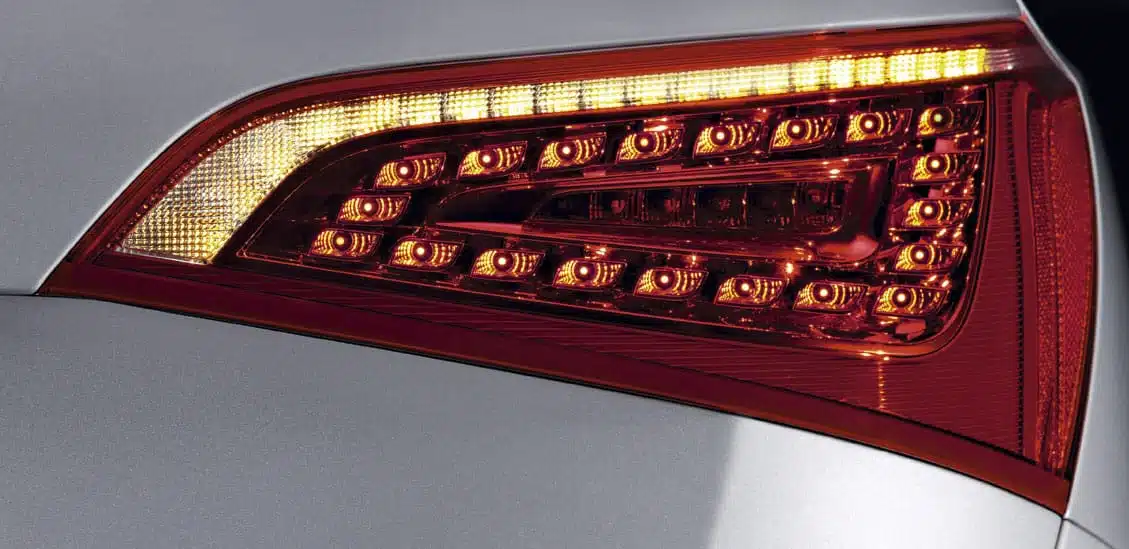
Audi Q5 tail lamp 2008
Solutions to avoid the hot spot
To address this challenge, the industry explored several technologies. Each comes with benefits and limitations:
- Diffusive materials: Injecting diffusion-grade materials into moulds provides excellent uniformity and a soft, milky finish. As a mould-based solution, it scales well to mass production. However, drawbacks include thickness dependency (which may require added material and weight), higher material costs, and Ameca concerns.
- Optical films: Films can offer high diffusion quality with a wide design range, but as they must be added over the final injected part, giving more complexity to the process with extra assembly operations. This increases cost, and limits design flexibility — especially in complex geometries.
- Graining: Engraving mould inserts using chemical etching, erosion, or nanosecond lasers is cost-effective, fast, and fully compatible with mass production. However, it provides low quality diffusion and lacks correlation with optical simulation. Texture quality and process stability are also limited.
Introducing Microscatt®
At Microrelleus, we aimed to combine the benefits of the above-mentioned technologies while eliminating their drawbacks. Leveraging our expertise in femtosecond laser micromachining (see dedicated blog post), we saw the opportunity to offer a game-changing approach for light diffusion directly through mould texturing.
The result of years of R&D, experimentation and interation is Microscatt® — MICROtexturing and MICROstructuring for light SCATTering control.
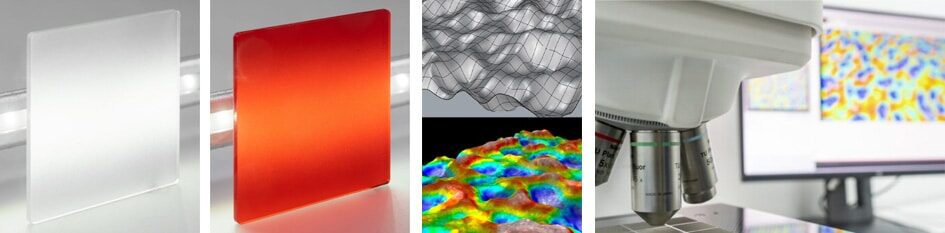
Confocal microscope analysis Microscatt® and final part
Microscatt® uses ultra-precise, burr-free femtosecond laser engraving directly on the production mould to create the micro-patterns. These are homogeneous, repeatable, and compatible with low demolding angles. The texture randomness is digitally controlled via algorithms, enabling tailored scattering properties, including both circular and elliptical diffusion with high luminance performance.
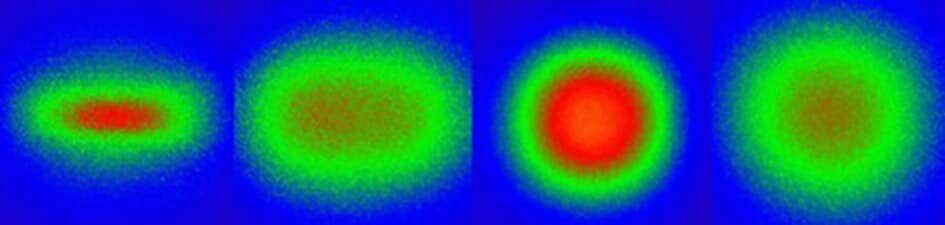
Luminance camera images of different Microscatt® references
From the outset, Microscatt® was developed with key objectives in mind: high-quality diffusion, tunable scattering levels, consistency across materials and conditions, compatibility with free-form 3D shapes, and cost-effectiveness through simplified production workflows.
Performance and comparison
In the image below, you can compare a standard VDI24 texture with Microscatt® MSC30 — both have similar roughness levels. However, Microscatt® provides much better diffusion and homogeneity, effectively eliminating LED hot spots.
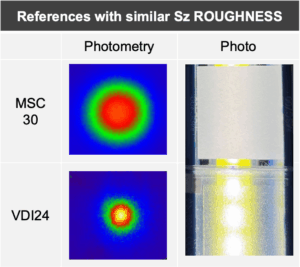
Comparison between VDI24 and Microscatt® reference MSC30
With higher-diffusion references, we can even match DF23 behavior using standard transparent PMMA or PC — no particles needed.
In addition, the texture is so fine that it can be applied (if required) only on optical structures (e.g., microlenses or prisms) without texturing the entire surface. This boosts uniformity with minimal luminance loss.
How it works
1
SIMULATION AND DECISION
Use BRDF/BTDF files in Speos, LightTools, or LucidShape to simulate Microscatt® references and select the best match for you.
ASK US FOR OUR OPTICAL ENGINEERING SUPPORT!
2
MOULD ENGRAVING
Microrelleus engraves the selected texture directly on the production mold using femtosecond laser.
3
PLASTIC INJECTION
The mould is ready for series production — no additional process steps required.
Applications
- 3D surface diffusion: Controlled diffusion over complex 3D or flat areas by injecting transparent material
- Over microstructures: Increased homogeneity by engraving just over the microstructures, not the background
- On reflectors: Increasing the diffusion of the metallized surfaces by engraving the mould.
- Light guides: controlled diffusion integration on guide surfaces for reduction of hot spots.
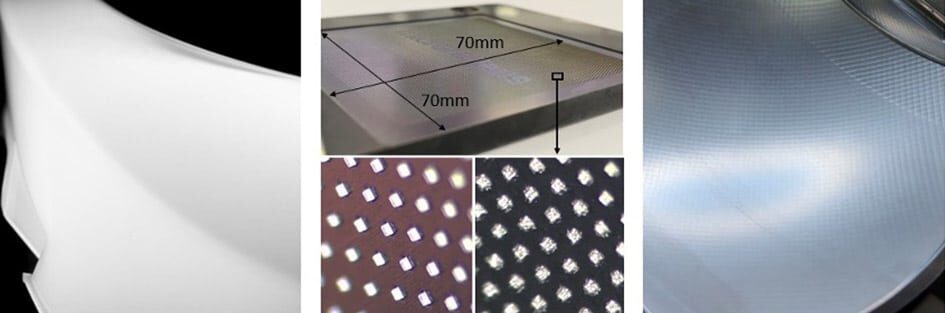
Different Microscatt® applications
Benefits

ENVIRONMENTAL BENEFITS
Material reduction because diffusion is independent from material thickness
–
Easy to recycle by using monocomponent material without particles
–
Easy to recycle by avoiding added films

DESIGN BENEFITS
Beautiful surface finishing with almost invisible pattern
–
Possibility of controlled diffusion on ultra thick pieces
–
Possibility of engraving 3D curved tools
–
100% digital process: free-form design area

COST-EFFECTIVE SOLUTION
Energy reduction: possibility of less LED
–
Reduction of injected material and weight
–
No need of expensive diffusers or films
–
Processes simplification: tool engraving + injection
Real-world examples
Microscatt® is already integrated into several vehicles. For example:
- Lancia Ypsilon: Microscatt® was applied over optical pillows to eliminate LED hot spots.
- Cupra Formentor: Microscatt® was used over optical prisms to enhance light curtain uniformity and engraved on blade edges to eliminate reflections and improve visual appearance.
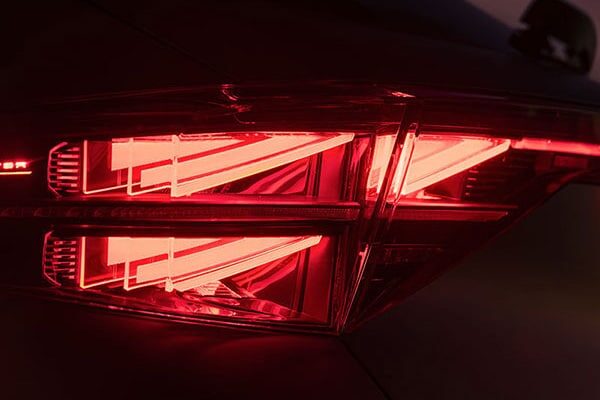
Cupra Formentor

Lancia Ypsilon
Microscatt is not limited to injection moulds
We can also engrave our custom-designed microstructures onto production rollers, enabling the continuous replication of advanced optical diffusion films. This solution is ideal for film and sheet manufacturers seeking to integrate high-performance optical properties directly into their products—without the need for additional post-processing. Interested in upgrading your film at the manufacturing level? Contact us and let’s make it happen!
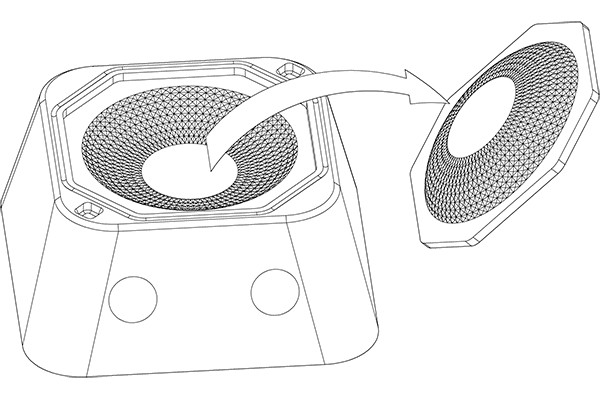
Microscatt® engraved in mould for plastic injection
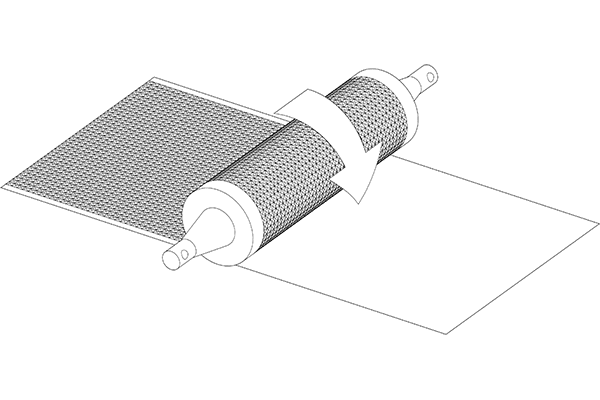
Microscatt® engraved in roller for film manufacturing


