
Redefining Automotive Lighting: Insights from CUPRA’s Raval Project
Reading time: 5 minutes
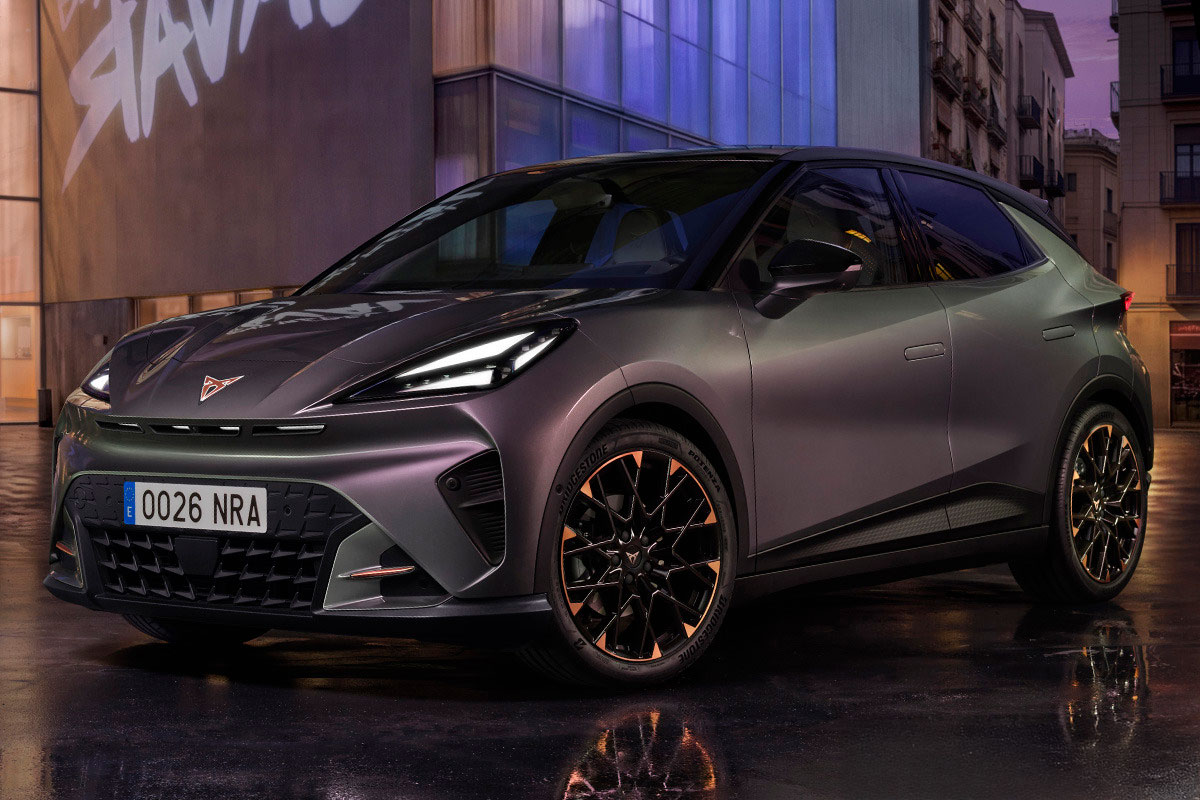
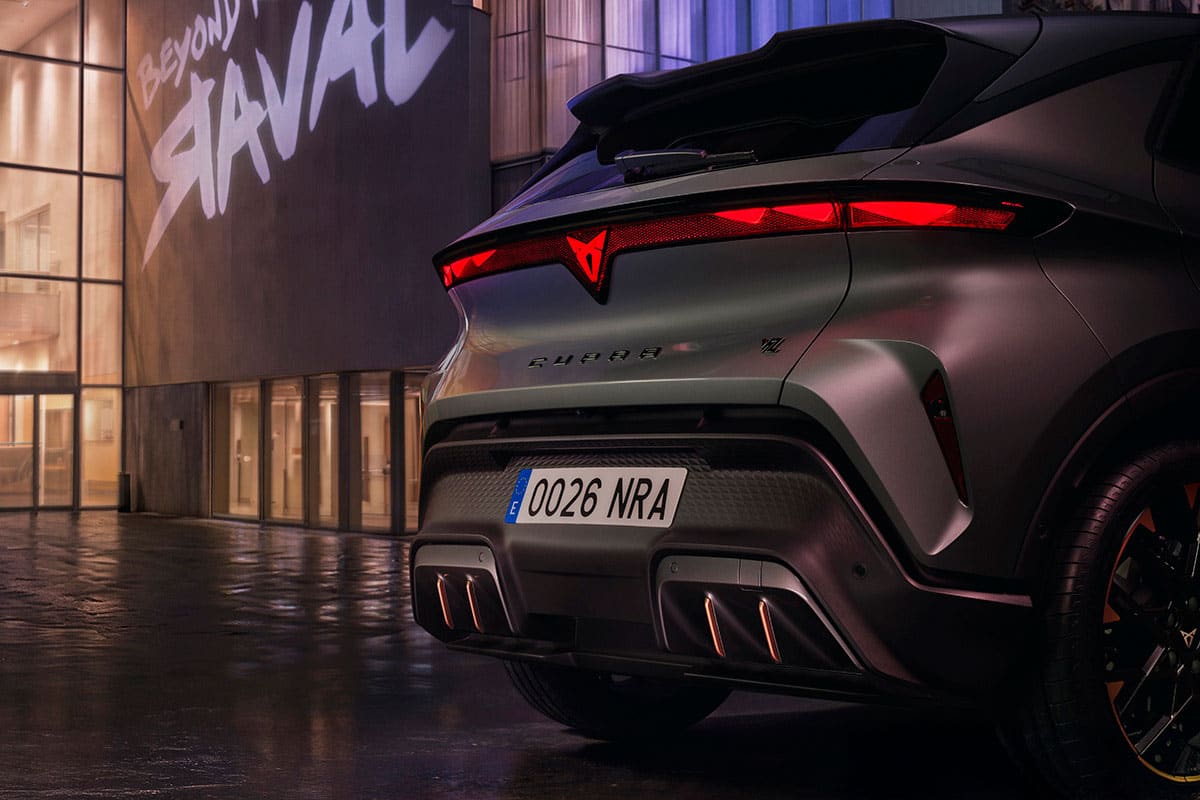
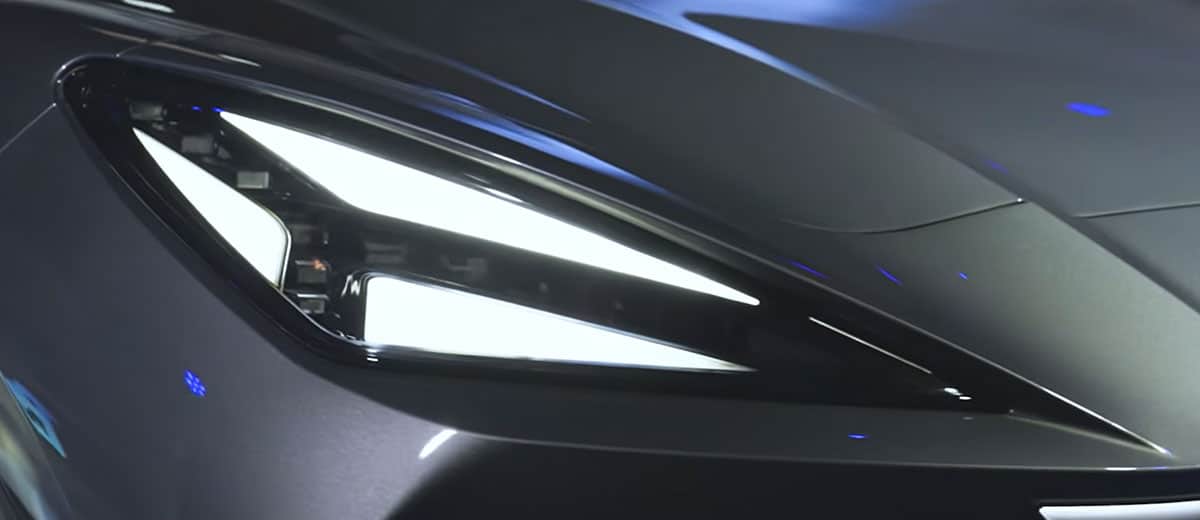
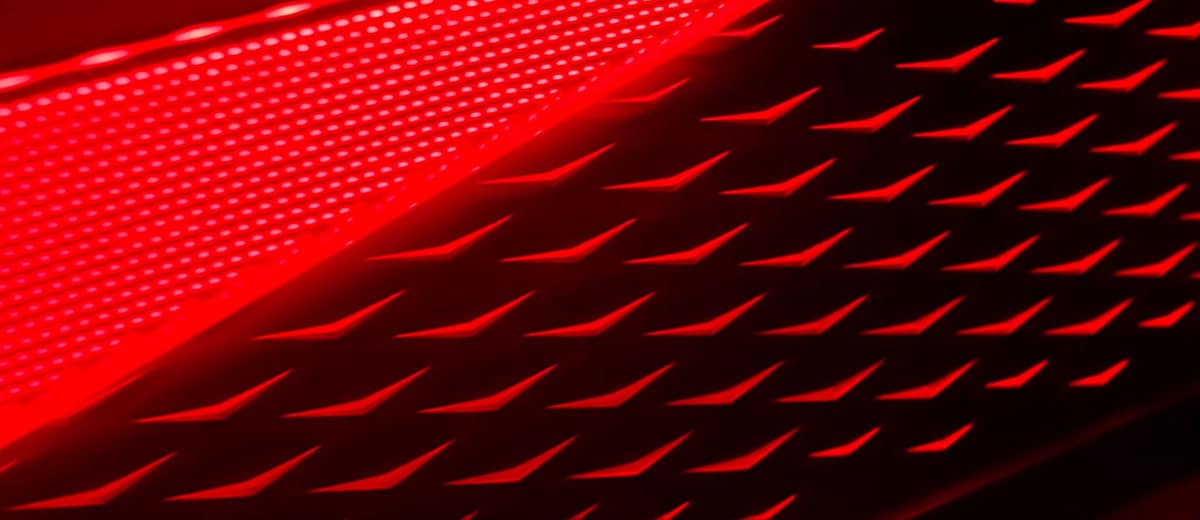
Automotive lighting is undergoing a transformation — from functional components to emotional and identity-defining elements.
With the launch of the new CUPRA Raval, this evolution becomes tangible: advanced micro-optics, precise light control and a distinctive visual signature converge into a new generation of design.
At Microrelleus, we have been closely involved in this journey, contributing to the development and industrialization of both headlamps and taillights through femtosecond laser technology.
In this article, we speak with Carles Elvira (Manager Lighting, Bumpers & Trim Exterior at SEAT / CUPRA) and Tony Gallardo (Design Leader Exterior Components and Illumination at SEAT / CUPRA) to understand how technology, design and collaboration have shaped this project — and what it means for the future of automotive lighting.
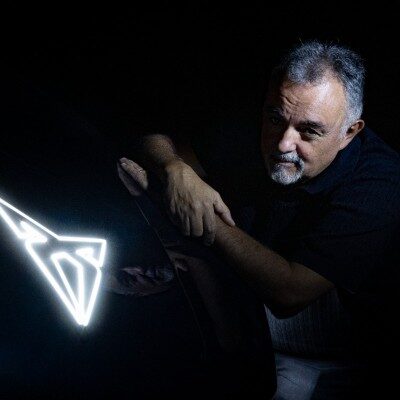
Engineering Light: from concept to industrial reality
Interview with Carles Elvira, Manager Lighting, Bumpers & Trim Exterior at SEAT / CUPRA
What was the main challenge in bringing such a complex lighting concept like the CUPRA Raval’s into production?
The main challenge was to transform a very ambitious design idea into a robust, feasible and industrially scalable lighting solution.
In projects like this, the difficulty is not only to create an impressive visual effect, but to make it compatible with optical performance, legal requirements, cost targets, tooling feasibility and mass-production quality.
What limitations did conventional technologies have?
With conventional technologies, we were limited in terms of precision, depth, surface detail and repeatability.
Some of the effects we wanted to achieve required extremely fine optical structures, with a level of detail that traditional processes could not deliver efficiently or consistently enough for series production.
What does femtosecond laser technology enable that was not possible before?
Femtosecond laser technology allows us to create extremely precise micro-structures directly on the surface.
This opens the door to new optical effects, new textures and new ways of controlling light, with a level of accuracy that is very difficult to achieve with conventional machining or engraving technologies.
How does this technology help achieve both high design impact and cost efficiency?
It helps because we can obtain a very strong visual impact without necessarily adding more components, more complex assemblies or expensive secondary processes.
In lighting, every additional part, every additional optical element and every extra process has an impact on cost, quality and robustness.
This technology allows us to integrate part of the optical and aesthetic function directly into the surface, which is very powerful from both a design and industrial point of view.
Does it reduce the gap between prototype and mass production?
Yes, absolutely. One of the key advantages is that the same technology used to develop the optical effect can be much closer to the final industrial solution.
That means fewer compromises between the show-car intention and the production reality. It helps us preserve the original design intent while making the solution technically and economically viable.
How important is it to involve technology partners from the early stages of a project?
It is essential. In advanced lighting projects, you cannot separate design, engineering, optics, electronics, tooling and manufacturing.
If technology partners are involved too late, many decisions have already been frozen and the room for innovation is much smaller.
When partners like Microrelleus are involved from the beginning, we can explore new solutions together, understand the limits of the technology and design something that is both innovative and realistic.
What has the collaboration with Microrelleus been like in this project?
The collaboration has been very close and very constructive.
Microrelleus brought deep expertise in micro-engraving and femtosecond laser technology, and we brought the automotive lighting requirements: design intention, optical performance, validation needs, cost sensitivity and industrial robustness.
The value of the collaboration was precisely in combining both worlds.
How do you see the future of femtosecond laser applications in automotive lighting?
I see a very promising future. Automotive lighting is becoming more emotional, more digital and more design-driven, but at the same time it must remain affordable, robust and compliant with regulations.
Femtosecond laser technology can play an important role in this evolution, especially for micro-optics, decorative light signatures, hidden effects, surface texturing and new ways of managing light.
For brands like CUPRA, where lighting is a key part of the identity, this type of technology can help create distinctive, high-impact solutions with real industrial potential.
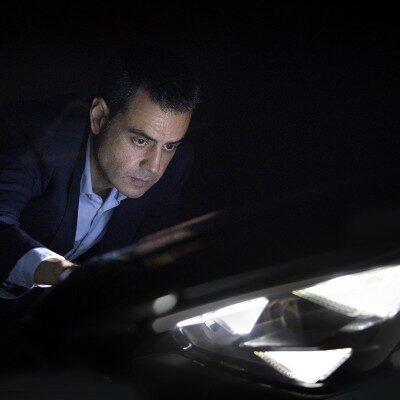
Designing light as identity
Interview with Tony Gallardo, Design Leader Exterior Components and Illumination at SEAT / CUPRA
Lighting is key in CUPRA’s DNA. What did you want to express with the design of the Raval?
At CUPRA we use light as an emotional element that defines our attitude as a brand. With the design of the Raval we wanted to express this progressive and differentiating identity. Light does not only illuminate it creates atmosphere, generates depth and conveys character. Our new generation of products is based on the three triangles, a deconstruction of our logo that has become our light signature. We want lighting to communicate who we are even when it is off, giving presence, personality and immediate recognition.
What new creative possibilities has advanced microtexturing opened up for you?
Advanced microtexturing allows us to control the interaction between light and surface with a completely new level of precision. We can explore transparencies, gradients, micro-reliefs and densities that were not possible before, achieving very homogeneous surfaces with a technological aesthetic. These textures contribute to making the light feel richer, more three-dimensional and sophisticated.
What did the femtosecond laser allow you to do that was not possible before?
The femtosecond laser offers us an extreme level of definition and cleanliness in engraving. Thanks to it we can create precise, repeatable and durable microstructures, maintaining the quality of the molds and ensuring perfect homogeneity on complex 3D surfaces. This technology enables a visual control that was simply not viable before with conventional processes.
How would you describe the visual effect achieved with these microstructures?
The visual effect is clean, homogeneous and very technological. The surface seems “alive”, as the transition between transparency and the illuminated area is perceived as natural and fluid. This type of microstructure provides an immediate feeling of quality and technological value, aligned with the CUPRA identity.
Do you think this technology allows bringing “premium” design to more accessible segments?
Yes, without a doubt. Traditionally, more design meant more cost. However, microtexturing and control over illuminated surfaces allow us to create effects very close to OLED —surfaces, not points— but at a much lower cost. This democratizes “premium” design and allows us to apply it across a wider range of models.
To what extent does the user perceive these details even if they do not know how they are made?
They perceive it immediately. Even if the user does not know the technique, they do perceive that the light is different: more sophisticated, more homogeneous and more refined. Lighting is an element that connects emotionally and these details generate a direct feeling of quality.
How important is it to work with technology partners from early stages? What has the collaboration with Microrelleus been like?
It is absolutely key. This type of project is only possible if design and engineering move forward together from the initial phases. With Microrelleus we worked hand in hand, experimenting with different types of engraving, levels of transparency and homogeneities on 3D surfaces. The collaboration was close and fundamental to achieve the level of precision we were looking for.
How do you see the evolution of lighting design in the coming years?
The evolution is clear: we have moved from points, to lines and now to surfaces. But beyond form, lighting is increasingly oriented towards the user experience, becoming an element capable of communicating, accompanying and generating emotions. We will see growth in the use of microtextures, active surfaces and animations specifically designed to make interaction more human.
Lighting will not only be a functional or purely aesthetic element: it will be a sensory language that will allow the vehicle to express itself. It will serve to welcome, convey states, reinforce the personality of the car and create an emotional connection with the driver and occupants. Signatures will be more recognizable, animations more fluid and the light narrative richer both at the front and rear, making each interaction add value and personality to the overall user experience.
The CUPRA Raval project reflects a broader shift in automotive lighting — where design, engineering and micro-scale technologies converge to create distinctive visual identities.
At Microrelleus, we continue to explore how advanced microtexturing and femtosecond laser technologies can enable this new generation of lighting.


